


Word Challenge-Daily Word Game
4.31.01K Reviews
App Specs
- Version
- 1.3.6
- Updated On
- License
- Free
- Downloads
- 1,000,000+
- Developer
- MeeGame Studio
- Categories
- Word
- Platform
- Android
Screenshots
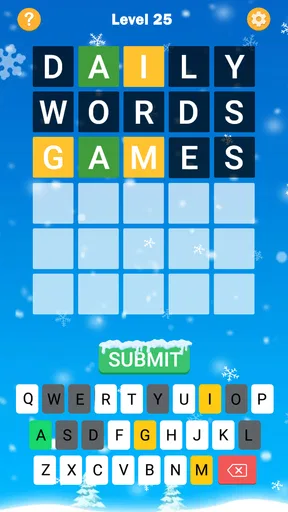
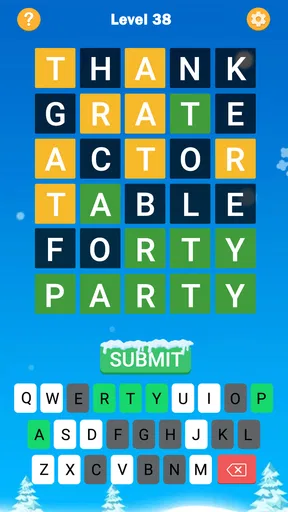
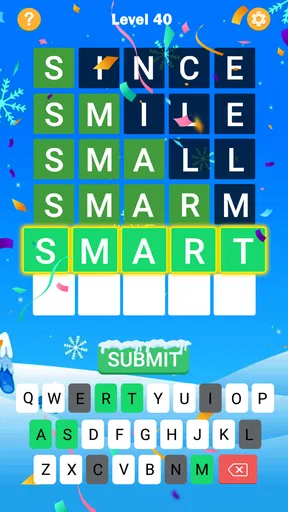
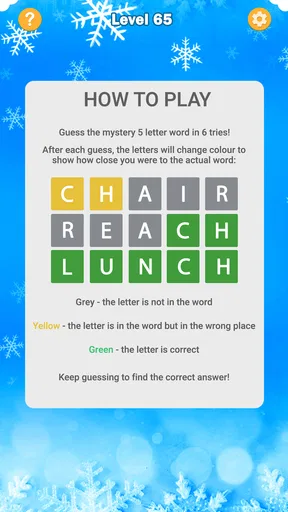
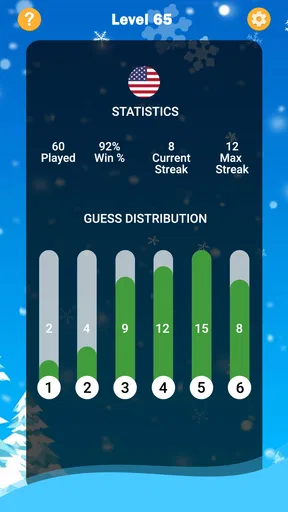
 Analysis by AppCompare
I spent time with Word Challenge-Daily Word Game as a small, focused word puzzle rather than a broad collection of language games. Its appeal is easy to understand: open it, face a daily word, and give your attention to one compact challenge. That makes it a natural fit for a short break, a commute, or the moment when I want something quieter than a fast action game.
What I found most interesting is how little commitment the basic idea demands. You do not need to learn a complicated ruleset before getting started, and the game’s Everyone age rating makes it approachable for a wide range of players. At the same time, the simple format means your enjoyment depends heavily on whether you like word deduction itself. If you want a long campaign, a large story, or a deep multiplayer system, this will feel deliberately narrow.
How the daily word format feels in everyday use
The game comes from MeeGame Studio and sits firmly in the word category. I see it as a pocket routine more than a traditional game you play for hours. The daily structure gives each session a clear purpose, which is useful when I want a mental reset without being pulled into an endless feed of levels.
A realistic use case is a five-minute pause between tasks. I can open the game, make a few considered guesses, and then stop without feeling that I have abandoned a long mission. That short-session quality is one of its strongest practical advantages. It also makes the game suitable for someone who wants to exercise vocabulary and deduction casually, without turning the activity into formal study.
The wording of the store summary presents the experience as a way to relax while guessing the daily word. In my experience, that description is most accurate when I treat the puzzle as a calm concentration exercise. It is not always relaxing if I become fixated on a stubborn answer, but the limited scope generally keeps the pressure lower than in games built around timers, combat, or constant rewards.
The current version is 1.3.6, and the game supports devices running Android 7.1 or later. That gives it a fairly broad technical reach for people using older compatible phones. I would still check the device requirements before installing on an especially old handset, but the stated minimum is not demanding by modern standards.
What makes the routine satisfying
The best part of a daily word game is the small act of narrowing possibilities. I usually begin with a guess chosen for useful letter coverage rather than personal preference. After seeing the result, I try to separate what I know from what I merely suspect. That distinction matters: a familiar-looking word can lead me in the wrong direction if I start forcing it too early.
Worth Reading Before You Choose

Flipboard Shows What News Apps Must Do Beyond the Feed

Switching to Android Auto Means Rethinking Your Driving Routine

Google Calendar Makes a Crowded Week Easier to Manage

Ludo King Makes the Most of the Minutes Between Plans

Baby Panda World Brings Quick Play to Modern Phones, but Its Game Library Feels Busy

ESPN’s Live Game View Makes Following Close Games Easier
My most useful habit was to treat every attempt as information, not just as a chance to be correct. I mentally grouped possible answers by their endings, common letter pairs, and likely vowel placement. This approach made the game feel more thoughtful and reduced random guessing. It is a simple technique, but it adds a layer of strategy that is easy to miss if I rush through the board.
Another practical tip is to stop for a moment after an unhelpful guess. When I immediately enter another word, I often repeat the same assumptions. A short pause lets me review the confirmed pattern and eliminate letters more carefully. That makes the experience feel less like tapping through guesses and more like solving a compact logic problem.
The daily limit, as presented by the concept of the game, can also be a benefit. A puzzle that ends after one challenge gives me a natural stopping point. Players who struggle with games that encourage continuous grinding may appreciate that restraint. Conversely, anyone who wants a large supply of puzzles in one sitting may find the daily focus restrictive.
Progress without turning the game into a chore
Word games often create an awkward balance between improvement and pressure. I want to become better at spotting patterns, but I do not want a missed answer to dominate my day. This title works best when I view progress as improving my reasoning habits rather than protecting a perfect record.
That mindset is especially useful for new players. Instead of trying to guess the answer immediately, I recommend using early attempts to test different letter positions and common combinations. A surprising result can be more valuable than a lucky first guess because it tells me which assumptions to discard.
There is also a trade-off in the daily format: it can create anticipation, but it can also make a difficult puzzle feel more significant than it really is. If I miss the word, I have not lost a campaign or damaged a character. I have simply encountered a challenging vocabulary problem. Keeping that perspective prevents the game from becoming unnecessarily stressful.
For parents or younger players, the Everyone rating is reassuring as a broad content classification. Still, the real question is vocabulary level. A child may understand the interface but find some words demanding, while an adult with a smaller English vocabulary may have the same experience. I would recommend it as a shared guessing activity rather than assuming the age rating guarantees equal difficulty for every player.
Fairness, spending, and what I would want to know
The game is free to install, which makes trying it straightforward. Its listed in-app purchases range from $0.99 to $18.99 per item. That is the important spending context I would keep in mind before playing: the entry cost is zero, but optional purchases are present and can vary considerably in size.
I am careful not to treat the existence of purchases as proof that the core puzzle is unfair. The available purchase information establishes the price range, but it does not by itself explain how each item affects play. I would therefore avoid buying anything immediately. I would first play normally, see whether the daily challenge is enjoyable without spending, and only then decide whether an optional item offers value to me.
This is also where the game’s compact design matters. In a word puzzle, fairness depends on whether the answer can be reached through the intended clues and reasoning, not on how much a player pays. If a purchase merely saves time or provides assistance, some players may consider it convenient while others will prefer solving independently. My recommendation is to preserve the puzzle’s challenge by attempting the word unaided before considering any help.
For players who enjoy competition, the central fairness question is whether everyone is engaging with the same daily challenge under comparable conditions. The daily-word concept naturally suggests a shared point of reference, but I would not assume a formal leaderboard, synchronized scoring, or a particular competitive system without seeing it directly in the game. If competition is your main reason for installing, treat that as something to inspect during use rather than the foundation of your decision.
I also would not compare this game to a full competitive word platform as though they offered the same experience. A dedicated multiplayer alternative may be better for live matches, rankings, social play, or detailed performance tracking. Word Challenge-Daily Word Game is more appealing when I want a private, focused puzzle and do not need a large competitive ecosystem around it.
Where the pressure comes from
The word “daily” can quietly change how a puzzle feels. A normal casual level can be postponed indefinitely, but a daily challenge creates a sense that today’s opportunity is special. I noticed that this can motivate me to return, yet it can also tempt me to play when I am tired and less patient.
My practical solution is to decide in advance how much effort the puzzle deserves. I give myself a few deliberate attempts, review the pattern, and then choose whether to continue. This prevents the game from taking over a break that was meant to be restful. It also keeps the result from becoming a measure of my mood or intelligence.
Players who enjoy streaks and routines may find this pressure motivating. Players who dislike missing scheduled content should think carefully before making it part of their daily habits. The game is at its best when the routine serves you, not when you feel obligated to serve the routine.
Another trade-off is vocabulary familiarity. A player with a broad word bank may have an advantage over someone who relies mostly on common everyday terms. That is not necessarily a flaw in a word game, but it does affect the feeling of fairness between friends with different language backgrounds. I would judge my own performance by the quality of my deductions, not only by whether I already knew the answer.
What I would check before spending or recommending it widely
Because optional purchases are listed, I would approach the game with a simple checklist. First, I would confirm that the free experience already gives me enough enjoyment. Second, I would identify exactly what an item provides before paying. Third, I would decide whether that benefit improves convenience or removes the part of the game I actually enjoy.
This matters particularly for a puzzle built around discovery. If the satisfaction comes from finding the answer through elimination, an assistance item may solve the immediate problem while weakening the reason I opened the game. On the other hand, a player using the game as a relaxed vocabulary prompt may value a nudge when stuck. The right choice depends on the purpose of the session.
I would also set a personal spending limit before browsing purchase options. The highest listed item is $18.99, so I would not tap through casually or assume every purchase is a minor add-on. A clear limit keeps a free-to-start word game in proportion to its role in my day.
There are a few details I would want to inspect personally while using it, especially around how assistance is presented and how results are recorded. I would not fill those gaps with assumptions. For a careful buyer, the sensible approach is to read each purchase prompt, understand the immediate benefit, and leave the store screen if the value is unclear.
Who should choose it, and who should skip it
I would recommend this game to someone who likes short word puzzles, enjoys building a daily habit, and prefers a calm challenge over constant action. It is also a good match for players who appreciate solving through letter patterns and vocabulary rather than reflexes. The free entry point makes it easy to test that fit without committing money first.
I would be more cautious recommending it to someone who wants a large library of handcrafted stages, a story, or a long-term progression system with many different modes. The daily-word identity is a strength for focus, but it is also a limitation for variety. If you need several puzzle formats in one app, a broader word-game collection may serve you better.
It may also be a poor choice for someone whose main goal is structured language learning. Guessing words can support vocabulary awareness, but it is not the same as lessons, definitions, pronunciation practice, or a guided curriculum. I would use it as a light supplement to language practice, not as a replacement for a dedicated learning app.
Likewise, highly competitive players should compare expectations carefully. If you want head-to-head matches and extensive statistics, a multiplayer-first word game is likely the better option. This title makes more sense for a personal daily challenge that can be discussed with friends, rather than a complete tournament environment.
My trust verdict after weighing the trade-offs
The game has a solid public footprint: it carries a 4.3 average from around 31 thousand ratings and has passed one million installs. Those figures suggest that it has reached a substantial audience, while the roughly one thousand written reviews indicate that many players have taken the time to comment on it. I see that as useful context, though not a substitute for deciding whether its format matches my habits.
Its free price and Everyone rating lower the barrier to trying it, while the $0.99-to-$18.99 purchase range is the main point where I would slow down. I would not describe the game as pay-to-win based only on those prices, and I would not promise that every feature is equally valuable without examining each purchase in context. My trust position is simple: play first, understand the offer, and spend only when the benefit is clear.
What I like most is the discipline of the format. One daily word can give me a small, contained mental task instead of another endless stream of content. The strongest non-obvious advantage is that it rewards careful information management: choosing guesses for coverage, separating confirmed letters from assumptions, and resisting the urge to solve by luck.
What keeps it from being an automatic recommendation for everyone is the same narrow focus. If the answer is too obscure for your vocabulary, if daily pressure bothers you, or if you expect rich competition, the experience may feel thin. A different word app will be a better choice in those situations.
Overall, I would install Word Challenge-Daily Word Game for its free, low-commitment daily puzzle and keep my expectations focused. My advice is to treat it as a short reasoning ritual, not as a full word-game universe. Used that way, it is an approachable option from MeeGame Studio, with enough strategic texture to make a few minutes feel worthwhile and enough spending flexibility to require sensible boundaries.
Pros
- Short daily rounds make it easy to fit into a busy schedule.
- Helpful hints can keep difficult puzzles from becoming frustrating.
- Clean interface makes the game comfortable to use on small screens.
- Progress tracking encourages regular play and vocabulary practice.
- Works well as a relaxing alternative to more competitive games.
Cons
- Some puzzles may feel repetitive after extended daily play.
- Hints can reduce the satisfaction of solving words independently.
- Difficulty may vary noticeably between different daily challenges.
- Ads may interrupt the experience
- depending on the version installed.
- Limited gameplay modes can make the app less appealing over time.
FAQs for Word Challenge-Daily Word Game
What is Word Challenge-Daily Word Game?
Word Challenge-Daily Word Game is a casual word puzzle designed for players who enjoy testing vocabulary, spelling, and quick thinking. Each session presents word-based challenges that can usually be completed in a short time, making it suitable for daily play. The game gradually encourages you to recognize patterns, form words, and improve your performance through repeated practice.
How does the gameplay work?
The core gameplay typically involves solving daily word puzzles by arranging letters, guessing answers, or finding words that match the given clues and rules. As you progress, challenges may become more demanding and require a broader vocabulary or faster decisions. The straightforward controls make it easy to start, although some puzzles can be surprisingly difficult and may require several attempts.
Can I play Word Challenge-Daily Word Game offline?
Some parts of the game may remain available without an internet connection, especially previously loaded puzzles or basic single-player challenges. However, online access may be needed for daily updates, advertisements, cloud synchronization, leaderboards, rewards, or other connected features. If offline access is important to you, it is best to test the game after installation because availability can vary by device and version.
Is Word Challenge-Daily Word Game free to download and play?
The game can generally be downloaded at no initial cost, allowing users to try its main word challenges before deciding whether to continue. Free gameplay may be supported by advertisements, optional purchases, or limited hints. Depending on the version, some features, extra attempts, or ad-removal options may require payment, so review the store listing and in-app purchase information before downloading.
Is Word Challenge-Daily Word Game suitable for children and beginners?
The game is generally approachable for beginners because its controls and basic word-solving concept are easy to understand. It can also be useful for players who want to practice spelling or expand their vocabulary. Nevertheless, difficulty, advertising, and the presence of optional purchases should be considered before giving it to younger users. Parents should check the age rating and device purchase settings.


